
In-App Surveys
What are In-App Surveys?
Section titled “What are In-App Surveys?”In-app surveys are concise, targeted questionnaires presented to users while they are actively engaging with a web or mobile application. Because they appear in context – during real product usage – they enable teams to capture timely, relevant feedback without disrupting the user experience.
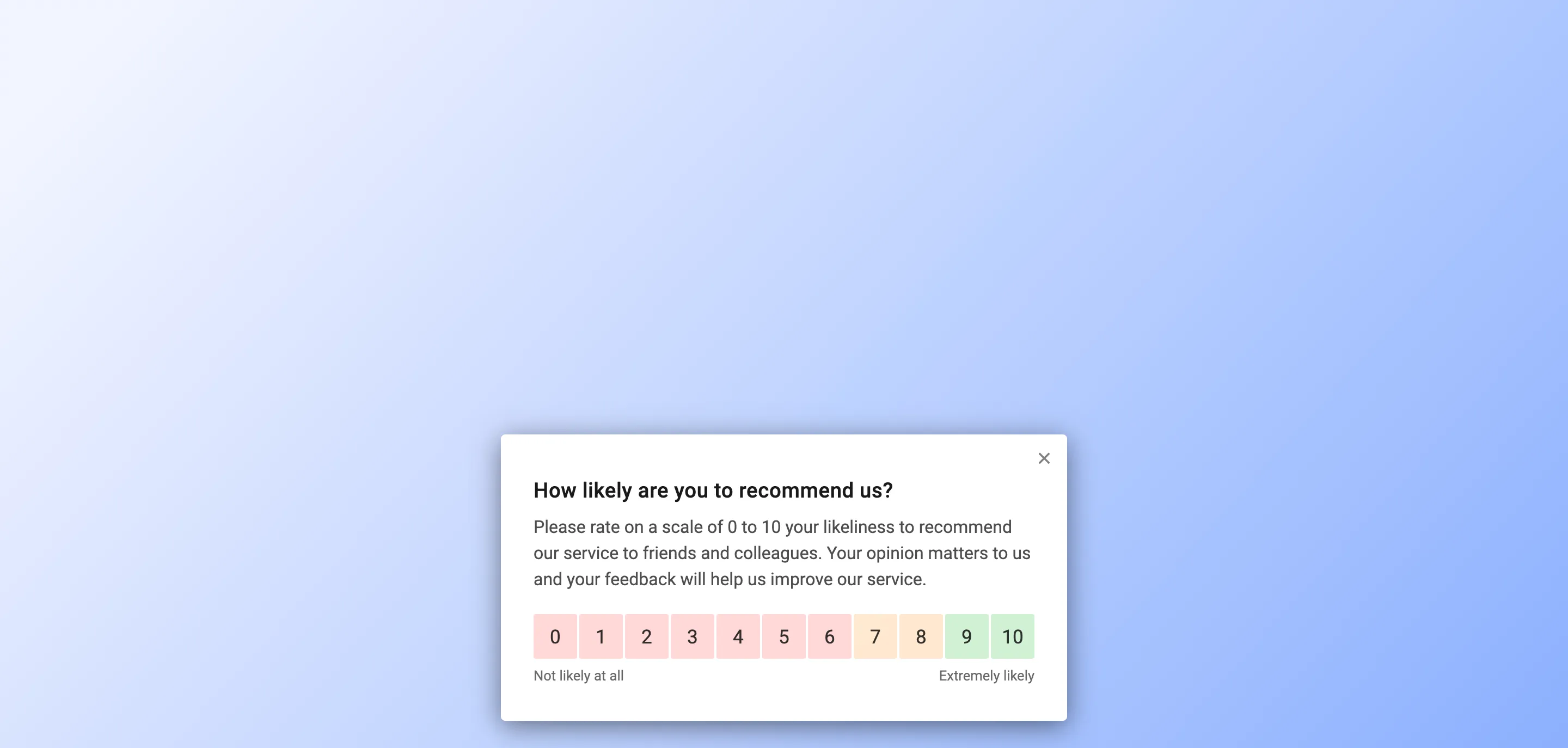
Example of an Web-App NPS Survey
In-app surveys Refiner’s flagship product, designed to help SaaS and mobile app companies better understand user sentiment, measure satisfaction, and drive product improvements based on real-time insights.
In-app surveys are a great way to collect actionable user and product feedback. They offer highly contextual insights and provide significantly higher response rates than traditional email surveys. Across 1,382 Refiner surveys, in-app surveys average a 27.52% response rate: 36.14% in mobile apps and 26.48% in web apps (survey statistics).
Usually, in-app surveys consist of a few simple questions only. They are typically used to gauge overall satisfaction with a product or capturing feedback on specific product features.
Supported platforms
Section titled “Supported platforms”Refiner allows you to launch in-app surveys across both web and mobile applications. This includes web-based apps (HTML & JavaScript) as well as native and cross-platform mobile apps such as iOS, Android, React Native, and Flutter.
Web apps (JavaScript)
Section titled “Web apps (JavaScript)”To run surveys in your web application, you’ll first need to install Refiner’s JavaScript SDK. Installation is flexible and can be done via a simple JavaScript snippet, Google Tag Manager, or our NPM package.
Once installed, you can manage everything directly from the Refiner dashboard. This includes creating and publishing surveys, customizing their appearance, and precisely targeting when and to whom they should be shown.
The JavaScript SDK supports both authenticated users within your app and anonymous visitors on public-facing websites, giving you full flexibility in how you collect feedback.
Mobile apps (iOS, Android, … )
Section titled “Mobile apps (iOS, Android, … )”With Refiner you can launch surveys within web-based applications, as well as native mobile apps. For native mobile apps development, we are offering SDKs for the following platforms and frameworks:
- iOS
- Android
- React-Native
- Flutter
You can find detailed information about how to install our SDKs here.
After installation, all survey management happens through the Refiner dashboard—no additional code changes are required. You can create new surveys, update existing ones, and control targeting and timing without needing to release app updates.
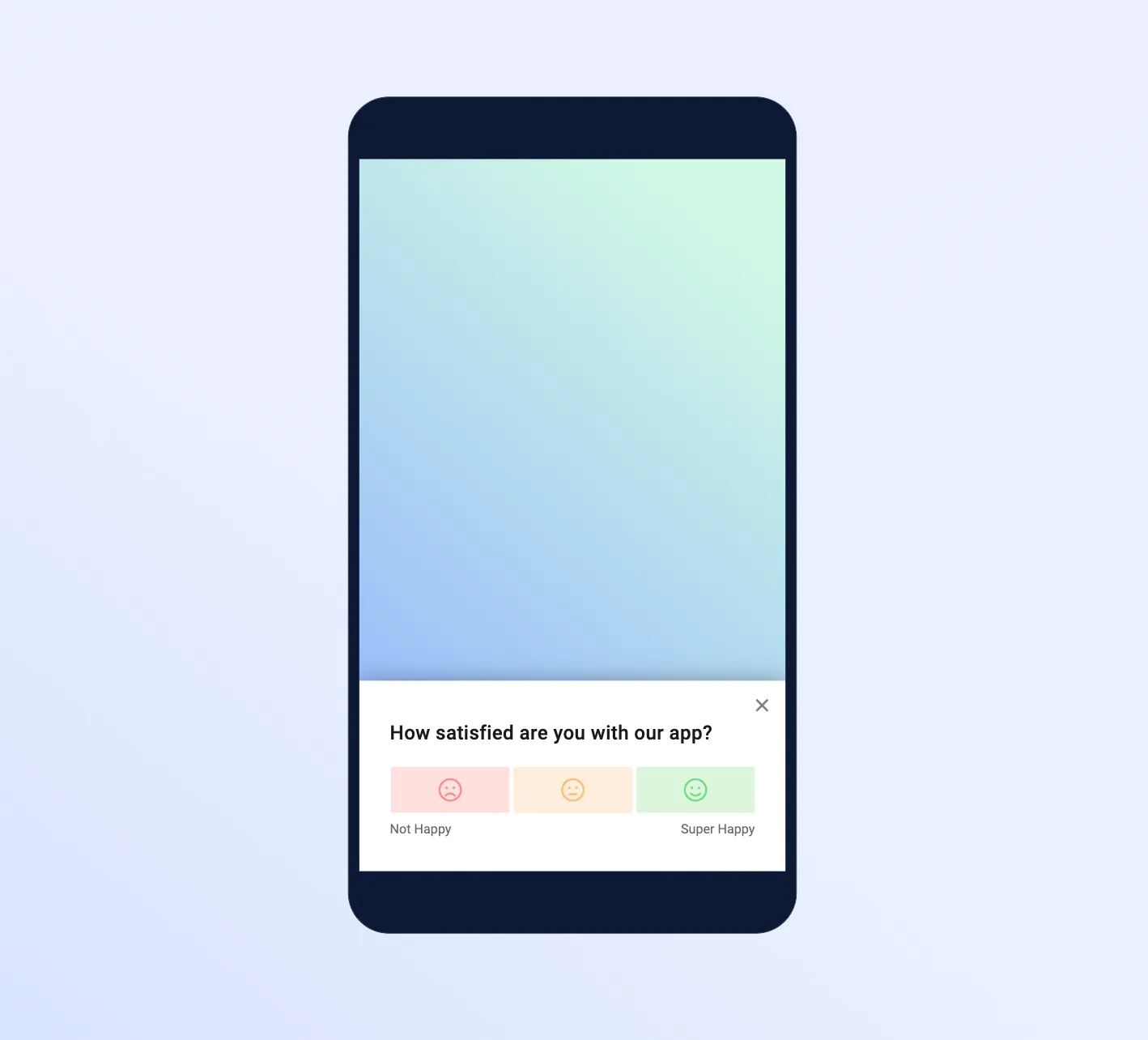
Example of a Mobile App Survey of Refiner
Create an In-App Survey
Section titled “Create an In-App Survey”Creating a In-App Survey is simple and usually only takes a couple of minutes.
When your create a new survey in your Refiner dashboard, simply choose either “Web App Survey” or “Mobile App Survey” as shown below.
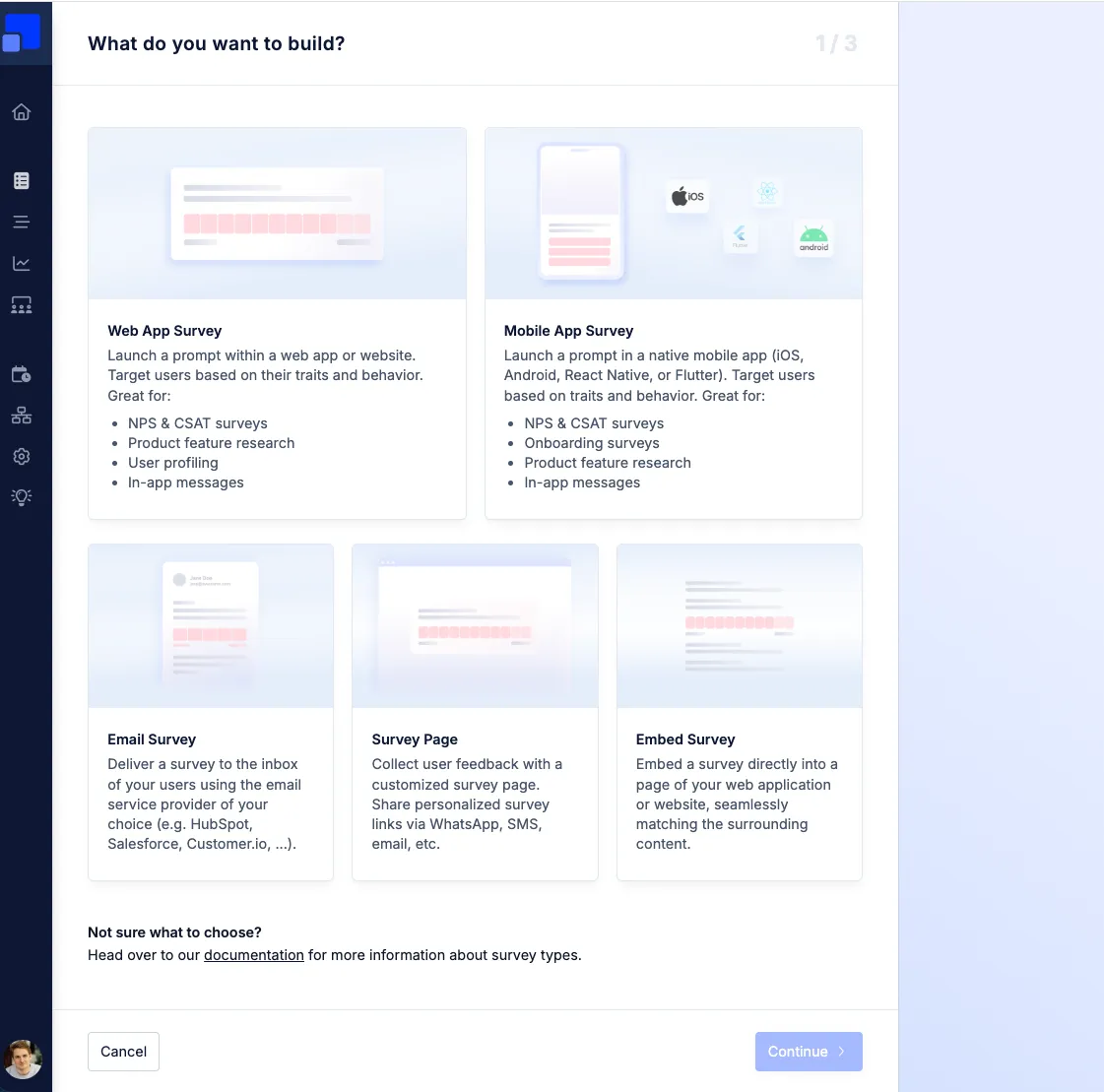
You can then choose on of battle tested survey templates or create a new survey from scratch.
Preview Surveys
Section titled “Preview Surveys”Refiner offers a preview option for Web App Surveys, allowing you to visualize a survey directly inside your web application. You can find it in the top-right corner of the survey editor.
For the preview to work, save your changes, make sure the JavaScript SDK is installed correctly, and open a URL from your application where you are logged in.
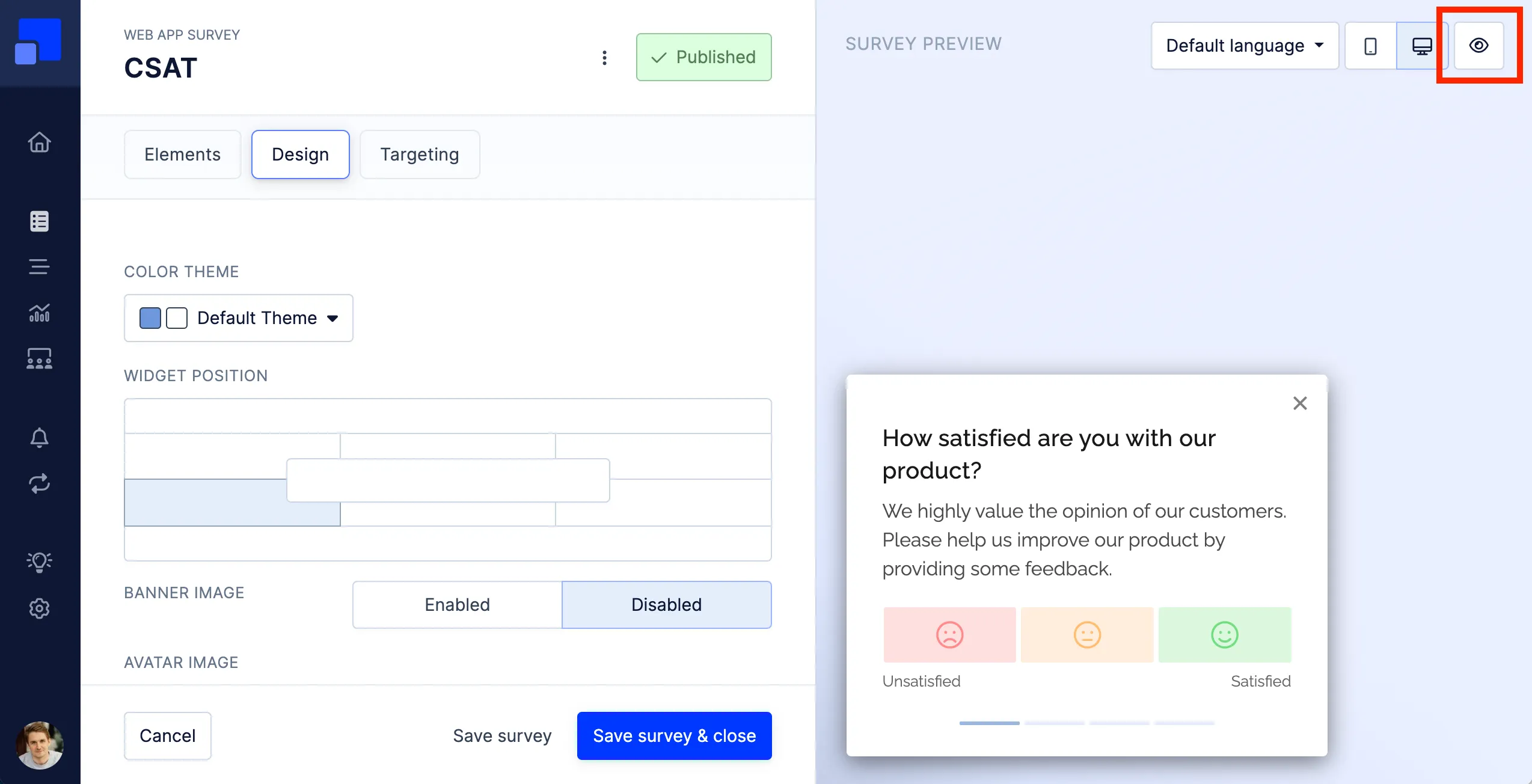
The URL should not redirect to another page.
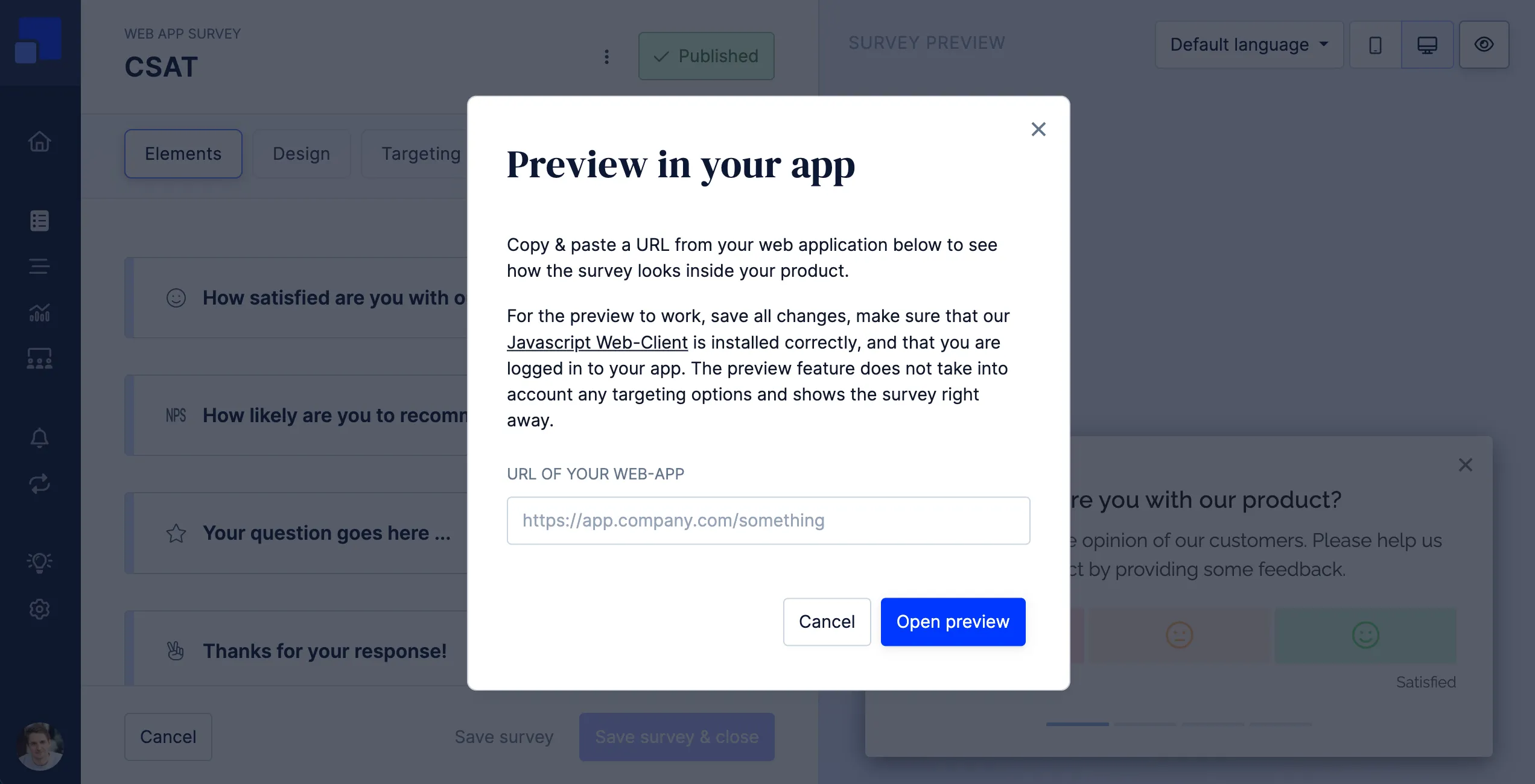
The preview is designed only to visualize the survey in context and does not apply targeting rules such as Target Audiences, page triggers, or time delays.
If you want to test the complete survey setup under real campaign conditions, a good alternative is to create a List Segment containing only you and your colleagues and use it as the Target Audience. This lets you test the survey exactly as it will behave once launched.
Frequently Asked Questions
Section titled “Frequently Asked Questions”What are best practices for in-app surveys?
Section titled “What are best practices for in-app surveys?”
What are best practices for in-app surveys?
Section titled “What are best practices for in-app surveys?”Keep surveys short (one to three questions), show them in context right after a relevant action, and target only the users who can give meaningful feedback. Limit how often the same user sees a survey, and follow up on the feedback you collect so users see that it leads somewhere.
Read more in our guide on in-app feedback best practices.
Who should you target with in-app surveys?
Section titled “Who should you target with in-app surveys?”
Who should you target with in-app surveys?
Section titled “Who should you target with in-app surveys?”It depends on the goal of the survey. Relationship surveys such as NPS are usually shown to all users to get a representative picture of overall sentiment. CSAT surveys and product research are usually aimed at a specific group, for example users who just used a feature, finished onboarding, or are on a certain plan.
You can define these groups with User Segments, using either Data-Driven Segments or List Segments, and select them as the survey’s Target Audience.
What is a good response rate for in-app surveys?
Section titled “What is a good response rate for in-app surveys?”
What is a good response rate for in-app surveys?
Section titled “What is a good response rate for in-app surveys?”In-app surveys get much higher response rates than email surveys. Rates of around 20% to 30% are common, and short, well-targeted surveys often perform even better. The exact number depends on the survey type, its placement, and your audience.
See our in-app survey response rate benchmarks for more detail.
How can I improve in-app survey response rates?
Section titled “How can I improve in-app survey response rates?”
How can I improve in-app survey response rates?
Section titled “How can I improve in-app survey response rates?”Ask fewer questions, start with an easy closed question, and show the survey at the right moment with a well-chosen Launch Trigger. Matching the survey design to your app and personalizing the copy also help.
Find more tips in our article on how to improve in-app survey response rates.
How often should I show the same survey to a user?
Section titled “How often should I show the same survey to a user?”
How often should I show the same survey to a user?
Section titled “How often should I show the same survey to a user?”By default, Refiner collects one response per user for each survey. For recurring measurements such as NPS, re-surveying the same user every 3 to 6 months is common, which you can set up with a time sequence in Recurring Surveys. Contextual surveys such as CSAT after a support interaction can run on each trigger event, combined with a per-survey Throttling limit so users who trigger them often aren’t asked every time.
How can I avoid survey fatigue?
Section titled “How can I avoid survey fatigue?”
How can I avoid survey fatigue?
Section titled “How can I avoid survey fatigue?”Survey fatigue usually comes from the total number of surveys a user sees, not from any single survey. Once several surveys run at the same time, coordinate them:
- Set Per-User Limits under environment-wide Throttling, for example no more than one survey per week for each user across all campaigns.
- Use Cross-Campaign Behavior to prevent overlap between campaigns, show surveys in a defined sequence, and decide which survey wins when several match at once.
- Keep each survey short and target it to the users it is relevant for, instead of showing every survey to everyone.
How can I test an in-app survey before launching it?
Section titled “How can I test an in-app survey before launching it?”
How can I test an in-app survey before launching it?
Section titled “How can I test an in-app survey before launching it?”Use the preview to see the survey inside your web app. To test targeting and triggers as well, create a List Segment that contains only you and your colleagues and use it as the survey’s Target Audience.